The "One & Done" Protocol
Single-set reps to failure for maximizing hypertrophy

Introduction
When I first got into resistance bands, it was through the X3 System. I was very attracted to the marketing: fast, simple, effective workouts you can do at home. I was very skeptical about some of the claims, but eventually purchased the system, and the rest is history. I've been hooked on bands ever since.
The original X3 program was based on single-set, reps to failure. You start, then keep going as long as you can until you can't anymore. Then you move on to the next exercise... simple. I've gone back and forth a few times between traditional periodization and the single-set reps to failure, colloquially known as the "one & done" protocol. I enjoy the variety of both. Most people know about the usual programming, like 3 sets of 10 reps, but for resistance band lovers who haven't heard of this single set method, I want to give an overview.
The "Fake Failure" Trap
Think you hit failure on that barbell bench press? Science says probably not. When gravity is involved, your brain subconsciously "brakes" early to keep you safe.
Trainees rarely reach true physiological failure with heavy iron due to the risk of injury (e.g., being pinned by a barbell). Consequently, sets often end with 2-3 repetitions in reserve (RIR), failing to maximize motor unit recruitment.
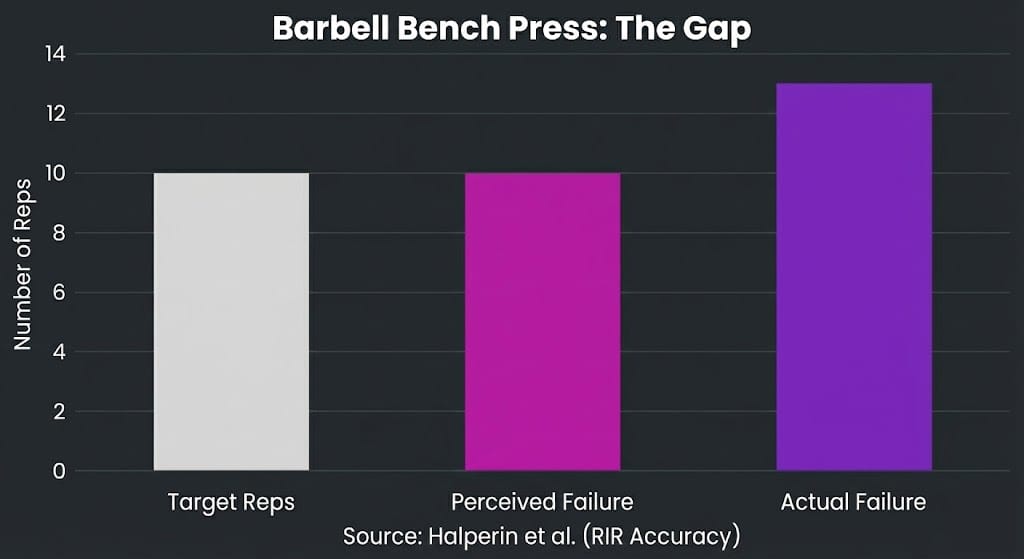
Resistance bands remove this gravitational risk. Because the force vector is linear variable resistance, failure results in the band simply shortening, posing no risk of crushing injury. This safety profile allows the trainee to push beyond psychological barriers to absolute neuromuscular failure, ensuring the single set is fully effective.
Why Bands Change the Game
When you swap the iron for a heavy band, everything changes. You aren't fighting gravity anymore; you're fighting elasticity.
- No Cheating: You can't bounce a band off your chest like a barbell, and you don't get any inertia. You have to earn every inch of that press.
- Built-in Safety Net: Fail on the last rep? No biggie! The band just shortens. You don’t get crushed.
You can push your muscles to a place they rarely go: True, Total Failure. You can fight that last rep for 10 seconds, shaking like a leaf, knowing you’re totally safe. That peace of mind lets your brain take the brakes off your strength
The Secret Sauce: The "Burnout" Set
With a bench press, once you can't lift it all the way up, you're done. Game over. But your muscle still has some juice left if the force is reduced.
With bands, you can keep going past failure.
- Phase 1 (Full Reps): Go until you can't get close to a lockout.
- Phase 2 (Partials): Don't stop! Keep doing half-reps. The band is easier at the bottom, so it matches your tired muscles perfectly. Keep going until you have nothing left to give and you are basically pulsing the band.
It creates a massive pump and traps all those muscle-building chemicals, signaling your body to grow. That is really hard (and dangerous) to do with heavy weights
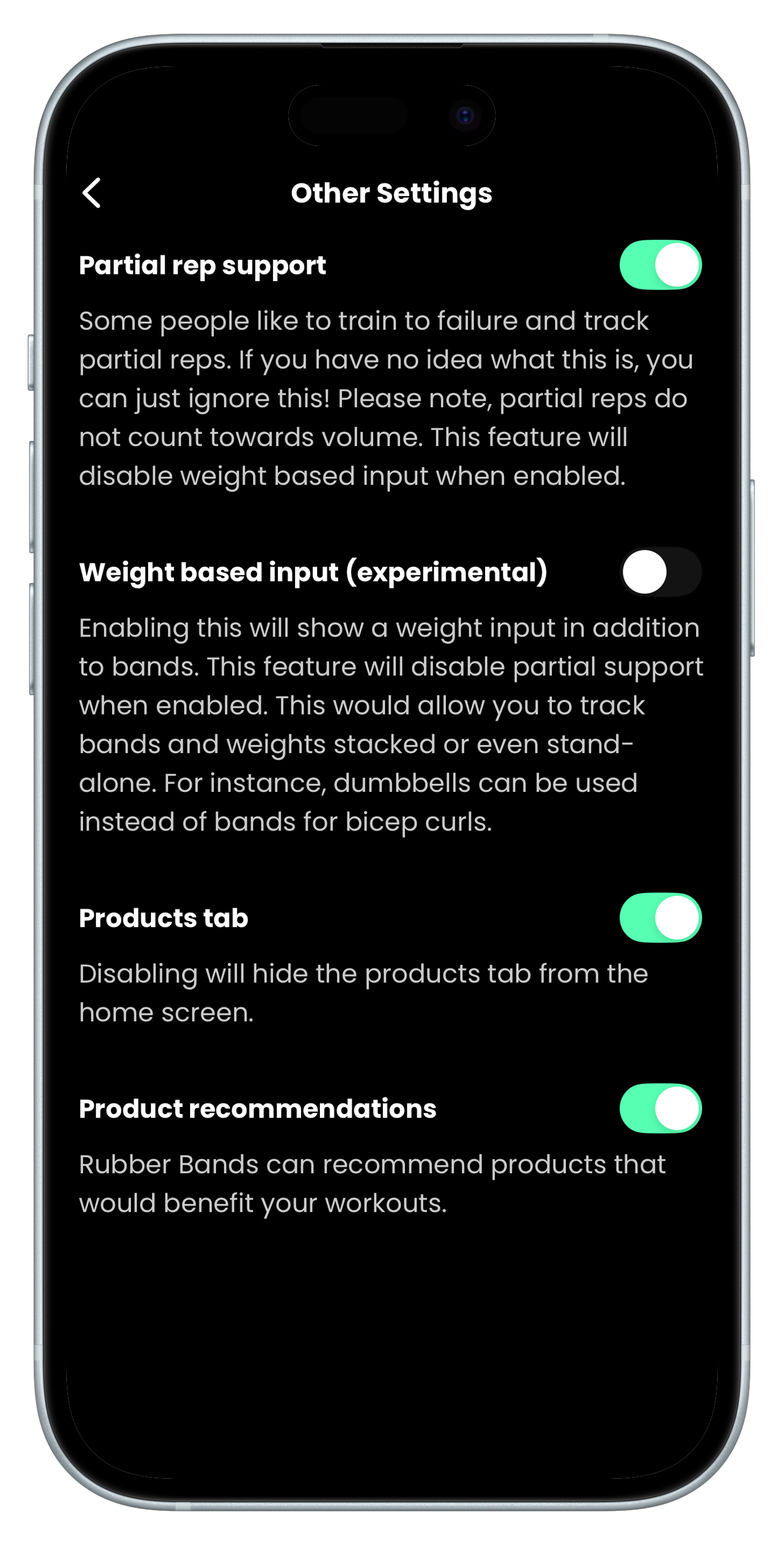
Rubber Bands Partial Rep Support
Rubber Bands supports partial reps out of the box when you enable it (in Other Settings). You will be presented with a new. This works best with Rep Schemes: "I'll Pick" Mode
Conclusion
Single-set failure training with resistance bands offers some compelling advantages over free weights, namely, the ability to safely achieve maximum intensity. By eliminating inertia and the physical risks associated with gravitational failure, this protocol allows for total neuromuscular exhaustion in a fraction of the time required for traditional volume training. For those seeking training efficiency without compromising the hypertrophic stimulus, this method may be the key to unlocking your next level of gains.